In live poker, information is everywhere — if you know how to look for it. Unlike online games, live poker allows you to observe your opponents’ physical behavior, emotional reactions, and betting habits. These clues, known as poker tells, can reveal whether a player is strong, weak, confident, or bluffing.
Understanding poker tells is a key part of live poker strategy. This guide explains how to recognize the most common tells and how to use them effectively at the table.
What Are Poker Tells?
Poker tells are unconscious signals that give insight into a player’s hand or mental state. They can be physical movements, changes in behavior, speech patterns, or betting actions. While no single tell is guaranteed, consistent patterns can provide valuable information over time.
Successful players don’t rely on one sign alone. Instead, they combine multiple tells with betting patterns and game context to make informed decisions.
Physical Poker Tells in Live Games
1. Hand and Body Movements
Physical behavior often changes when a player is emotionally invested in a hand.
Common signs include:
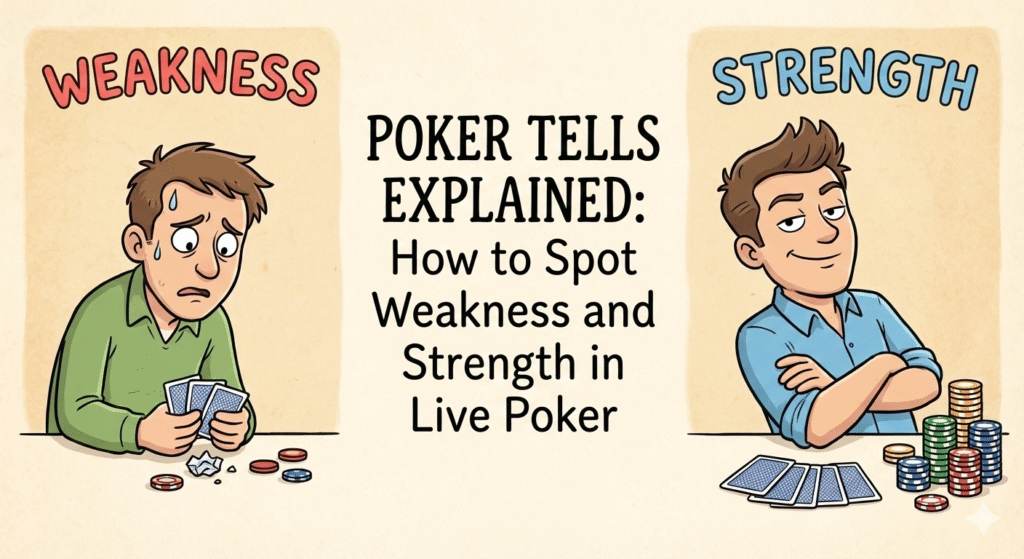
Shaking hands, usually indicating excitement from a strong hand
Rigid posture, often signaling confidence
Sudden stillness, commonly associated with strong holdings
Excessive movement, which may indicate nervousness or a bluff
These tells are most useful when compared to a player’s normal behavior.
2. Eye and Facial Expressions
Eyes and facial muscles often react before logic takes over.
Watch for:
Avoiding eye contact, which may indicate discomfort
Staring at the board or chips for too long, often a sign of uncertainty
Quick glances at chips after seeing cards, usually signaling strength
These reactions are usually brief, so attention is critical.
Verbal Poker Tells
Speech patterns can reveal confidence or weakness.
Examples include:
Talking excessively during a hand, often a sign of nervousness
Acting overly relaxed or joking, which may indicate strength
Sudden silence from a normally talkative player
While some experienced players use fake verbal tells, most casual players reveal more than they realize.
Betting Tells and Timing
1. Bet Sizing
Bet size is one of the most reliable tells in live poker.
Common patterns:
Small bets may signal weakness or a drawing hand
Large, sudden bets often represent strength
Inconsistent bet sizes can indicate uncertainty
Tracking how a player bets when strong versus weak helps identify patterns.
2. Speed of Action
Timing provides valuable insight.
Quick bets often indicate pre-planned confidence
Long pauses followed by aggressive bets may suggest a bluff
Hesitation before calling can indicate marginal hands
Timing tells become more accurate the longer you observe a player.
Strong Hand Tells vs Weak Hand Tells
Signs of Strong Hands
Calm and controlled behavior
Reduced movement
Confident chip handling
Consistent betting patterns
Signs of Weak Hands
Nervous movements
Forced conversation
Inconsistent bet sizing
Checking posture and reactions frequently
Understanding the difference allows you to adjust your strategy accordingly.
The Importance of Baseline Behavior
Before trusting any tell, establish a baseline. Observe how a player behaves in low-pressure situations. Once you understand their normal habits, deviations become meaningful.
Baseline observation is one of the most important skills in reading poker tells accurately.
Common Mistakes When Reading Poker Tells
Many players misinterpret tells by:
Relying on a single signal
Ignoring betting context
Projecting their own emotions onto opponents
Assuming all tells are universal
Poker tells are situational and player-specific. Always combine multiple observations before acting.
Using Poker Tells in a Poker Club Setting
Live poker clubs offer ideal conditions for reading opponents. Regular players develop consistent habits, making patterns easier to detect. Over time, you can build psychological profiles that improve your long-term profitability.
Pay attention, stay patient, and use poker tells as a supporting tool rather than a sole decision factor.
Final Thoughts
Poker tells add a powerful psychological dimension to live poker games. By learning how to observe body language, speech, betting patterns, and emotional reactions, you gain information that many players ignore.
Mastering poker tells takes time and experience, but the rewards are significant. Combined with solid strategy and discipline, reading opponents can turn close decisions into profitable ones.
If you want to sharpen these skills in real games, live poker sessions at a professional poker club offer the best learning environment.