Live poker offers a unique experience that online games cannot replicate. Players can read physical behavior, observe betting patterns, and engage in real-time psychological battles. However, many players fail to take full advantage of these elements and repeatedly make costly mistakes.
Understanding the most common poker mistakes — and learning how to avoid them — can significantly improve your performance and long-term results in live poker games.
1. Playing Too Many Hands
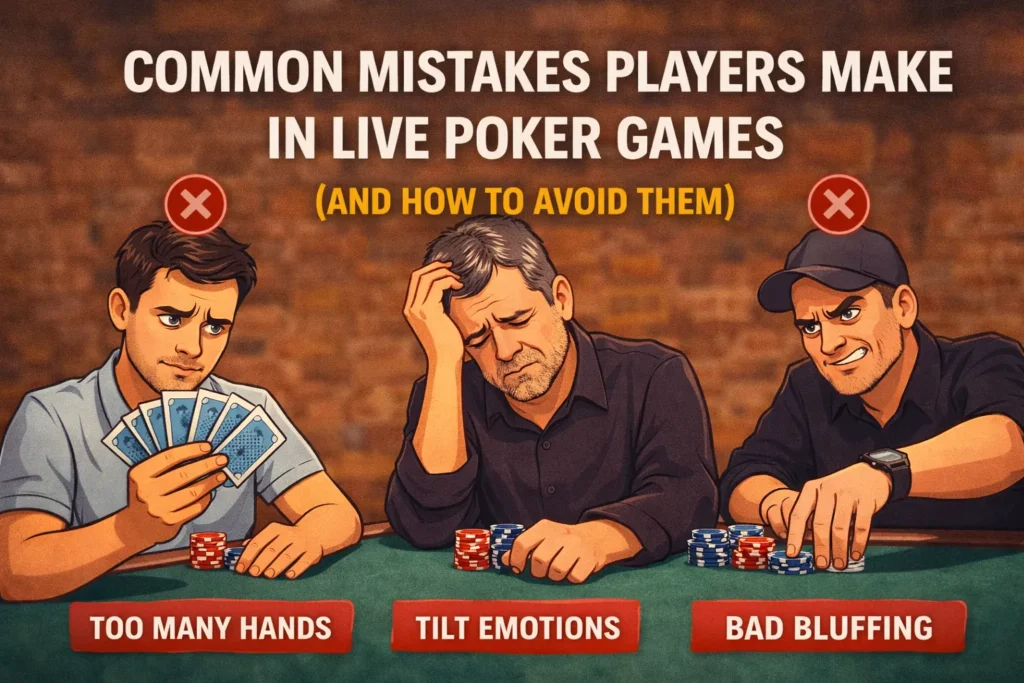
One of the most frequent beginner poker mistakes is playing too many starting hands. Live poker games move slower than online games, which tempts players to get involved out of boredom.
Why it’s a mistake:
Weak starting hands often lead to difficult decisions later in the hand and unnecessary losses.
How to avoid it:
Stick to a disciplined starting hand selection and adjust based on your position at the table.
2. Ignoring Position
Position is one of the most important concepts in poker, yet many players underestimate its value.
Why it’s a mistake:
Playing out of position limits your ability to control the pot and read opponents effectively.
How to avoid it:
Play more hands when you’re in late position and tighten up when acting early.
3. Failing to Observe Opponents
Live poker provides valuable information through body language, betting behavior, and timing. Many players focus only on their cards and miss these clues.
Why it’s a mistake:
Ignoring opponent behavior means missing opportunities to identify bluffs or strong hands.
How to avoid it:
Pay attention even when you’re not in a hand. Build profiles on how each player behaves when strong or weak.
4. Overvaluing Hands
Another common live poker mistake is becoming emotionally attached to strong-looking hands like top pair or overpairs.
Why it’s a mistake:
Strong hands are not always winning hands, especially in multi-way pots.
How to avoid it:
Evaluate the board texture, opponent action, and betting patterns before committing too many chips.
5. Poor Bet Sizing
Incorrect bet sizing is a major leak in many players’ games.
Why it’s a mistake:
Betting too small gives opponents good odds to call. Betting too large can scare off weaker hands.
How to avoid it:
Use consistent bet sizes that align with your goal — either extracting value or forcing folds.
6. Bluffing Too Much or Too Little
Bluffing is an important part of poker, but misuse can be expensive.
Why it’s a mistake:
Over-bluffing gets punished by calling stations, while never bluffing makes you predictable.
How to avoid it:
Choose bluff spots carefully and consider opponent tendencies, board texture, and your table image.
7. Letting Emotions Control Decisions
Emotional mistakes, often called tilt, can quickly destroy a good poker session.
Why it’s a mistake:
Anger, frustration, or overconfidence leads to poor decision-making.
How to avoid it:
Stay aware of your emotional state. Take breaks if necessary and focus on making logical decisions.
8. Not Adjusting to the Table
Many players stick to one style regardless of who they are playing against.
Why it’s a mistake:
Every table is different, and failing to adapt limits your edge.
How to avoid it:
Adjust your strategy based on table dynamics, player types, and stack sizes.
Final Thoughts
Avoiding common poker mistakes is just as important as learning advanced strategies. By tightening your starting hands, paying attention to opponents, controlling emotions, and adapting to the table, you can dramatically improve your results in live poker games.
Consistent improvement comes from awareness, discipline, and experience — qualities that separate winning players from the rest.