How to Read Opponents in Live Poker Games
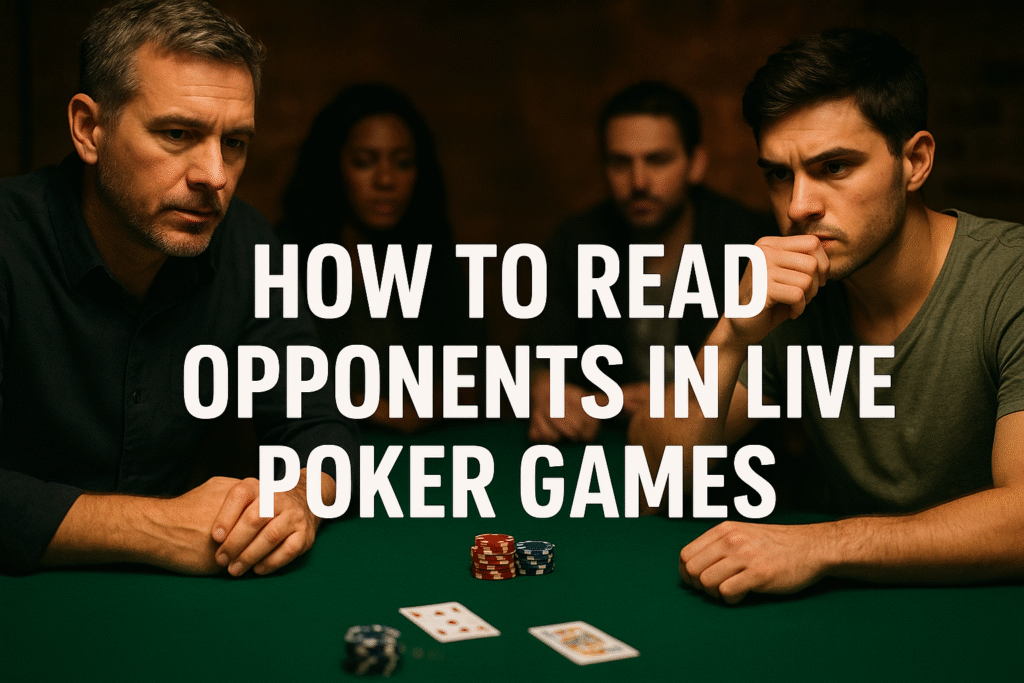
One of the greatest advantages in live poker is the ability to observe your opponents directly. Unlike online poker, where all information comes from betting actions alone, live games offer a rich mix of physical tells, emotional cues, and behavior patterns that can give you valuable insight into a player’s hand strength or mindset.
Learning how to read opponents doesn’t happen overnight, but with practice and awareness, you can improve your decision-making and gain a powerful edge at the table. This article explains the essential techniques for reading players in live poker games.
Why Reading Opponents Matters
Poker is not only a game of cards—it’s a game of people. Your ability to understand how others think, react, and behave allows you to make more accurate predictions about their holdings. When you combine strategic knowledge with strong observational skills, you increase your chances of making profitable decisions in difficult spots.
1. Understanding Poker Tells
Poker tells are physical or behavioral signals that reveal information about a player’s confidence or discomfort. While every player is different, some tells are common in live poker.
Common physical tells include:
Shaking hands: often a sign of excitement after hitting a strong hand.
Rapid breathing: can indicate nervousness or stress.
Staring too hard at the table: usually a sign of a bluff or uncertainty.
Suddenly becoming still: a player with a very strong hand often avoids movement.
These cues should never be taken as absolute truth. The key is spotting changes in behavior compared to how a player usually acts.
2. Reading Betting Patterns
Betting patterns are often more reliable than physical tells. Players tend to follow predictable habits depending on their skill level and confidence.
Look for:
Frequent small bets: often a sign of hesitation or a drawing hand.
Sudden aggression: can indicate a strong hand or a deliberate bluff.
Quick calls: may show a medium-strength hand that wants to see the turn or river.
Long delays before betting: could signal indecision or an attempt to appear weak.
Over time, you will learn how different players structure their bets and what their patterns typically indicate.
3. Observing Table Image and Personality
Every opponent carries a table image, which is how they are perceived by others. Understanding this helps you predict their behavior.
Common player types include:
Tight players: cautious and conservative, rarely bluff, fold often.
Loose players: play many hands, unpredictable, can be profitable targets.
Aggressive players: frequently raise and re-raise, try to dominate the table.
Passive players: call too often, rarely raise unless very strong.
By identifying which category your opponent fits into, you can make more accurate assumptions about their range of hands and overall strategy.
4. Watching Reactions After Big Hands
A player’s emotional response to winning or losing a pot reveals a lot about their mental state. Emotional swings often affect decision-making.
Signs to watch for:
A player who just lost a big pot may tilt and become more reckless.
A player who wins a huge hand may become overconfident and loosen up.
A quiet, frustrated player may become more cautious and predictable.
These shifts offer opportunities to exploit opponents who are temporarily off balance.
5. Listening to Table Talk
Verbal cues can be surprisingly useful. Some players talk more when nervous, while others go silent when holding strong hands. Casual conversation between hands can also reveal experience level, confidence, or emotional state.
Be cautious, though—skilled players may talk deliberately to mislead you. Always compare what they say to what they do.
6. Establishing Baselines
The most important rule in reading opponents is to establish a baseline for each player. This means observing how they normally behave when they are relaxed and not involved in major hands.
Once you know their standard behavior, any sudden change becomes meaningful. This makes your reads far more accurate.
7. Avoiding Assumptions and Staying Objective
Human behavior is complex, and not all tells are reliable. Avoid making big decisions based on one small sign. The best players collect multiple pieces of information—bet sizing, timing, posture, and speech—before reaching a conclusion.
Stay objective and avoid projecting your own fears or desires onto opponents. Effective reading comes from careful observation, not guesswork.
Final Thoughts
Reading opponents in live poker games is a skill that develops through experience, patience, and attention to detail. By studying behavior, analyzing betting patterns, and observing emotional reactions, you gain insights that allow you to make smarter, more confident decisions at the table.
Live poker rewards players who pay attention. The more you practice these techniques, the more intuitive and accurate your reads will become, giving you a consistent advantage every time you sit down to play.